David Stairs
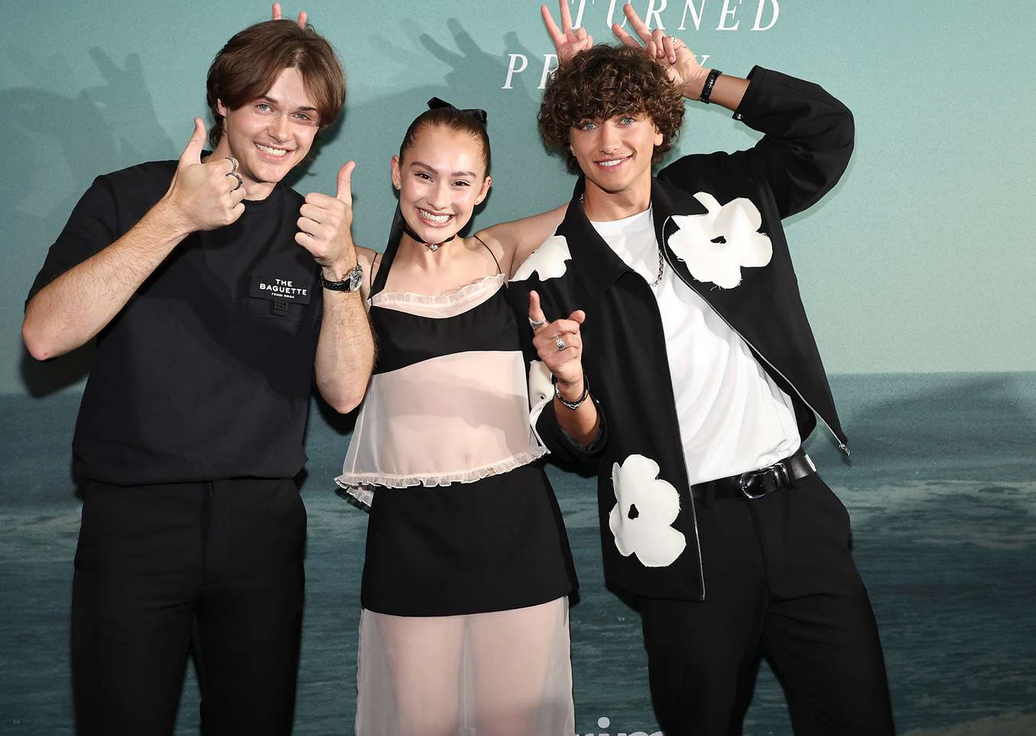
Main cast members of The Summer I Turned Pretty
Have you ever thought about how much attention is focused on teens? I don’t mean as a target market. Anyone can make vague statements about “youth culture” and its purchasing power. This has been a topic of discussion since Elvis and Rebel Without a Cause. No, what I’m talking about here is the fascination with the experience of the “wonder years.”
In the early days of television, the cute little Beaver held our bemused attention, along with Ricky and David Nelson and the boys from My Three Sons. And down on the beach, with Jan and Dean and the other beachy Boys on the radio, we had Gidget and Annette Funicello playing volleyball and dancing in their swimsuits. Rarely did these story lines rise above predictable solutions to white bread problems. In fact, it took Lance Loud and his siblings to jar America out of its 1950’s self-absorbed lethargy. But Lance’s coming out on a made-for-public-broadcasting documentary is a far cry from the rich selection of teen-obsessed angst available to the streaming generation.
If I were to label an origin point I might start with the ’90s Clare Danes vehicle My So-Called Life. Coming-of-age stories are so commonplace that there’s an entire YA section not only in the library, but on Amazon. But whether of life-or-death adventures with J-Law-Katniss or of supernatural monsters with Milly-Bobbie-Eleven, the fascination with the misery of growing up seems to have taken firm hold of the collective consciousness.
Back up a bit to 2009 when the Grease/High School Musical comes of age in prime time with the multi-year frolic of Ryan Murphy and Brad Falchuk’s Glee, which broke a number of taboos with its LGBTQ story arcs. More recently things have only accelerated, first with Outer Banks where John B leads the Pogues in their fight with the Kooks for the privilege of finding buried treasure. Then we have Never Have I Ever and the tribulations of being an Indian adolescent. Let’s not forget the teen drivers and mechanics of Motorheads. Follow this hard on with Sex Education, about a group of British secondary school kids navigating the loss of virginity. And finally, we arrive at the three-season fever dream of The Summer I Turned Pretty and the phenomenon named Bella.
When we speak of “extended adolescence” we refer to the social circumstances, like college, unemployment, or the Covid pandemic, that force young people to maintain their umbilical connection to their family of origin. The thing that’s most scary to me about these coming-of-age dramas is that the cast is usually 5-10 years older than the characters they portray. Of course, it’s often difficult to judge a person’s age between 20 and 30, and maybe it takes experience to recreate the chaotic years between 14 and 20, but I find it just a wee bit cringey, if not to say exploitative, to have 27-year-olds running around pretending to be 17. Even though this does not apply in all cases, Millie Bobby and Co. for example, it kind of suggests the industry does not consider teen actors mature enough to represent themselves (over 35 years ago the cast of 90210 ranged in age from 17 to 29). And then again, when, exactly, do these extended adolescents “age out” of playing characters half their age?
The Greeks called adolescence “hebephrenia.” This word was later adopted to refer to a certain type of schizophrenia in the DSM-IV, describing the chaos and disorganization often associated with growing up. The DSM-5 no longer uses these subtypes but, while no longer a formal diagnosis, the concept seems to linger in the minds of television writers. Would somebody please update them?
David Stairs is the founding editor of the Design-Altruism-Project.